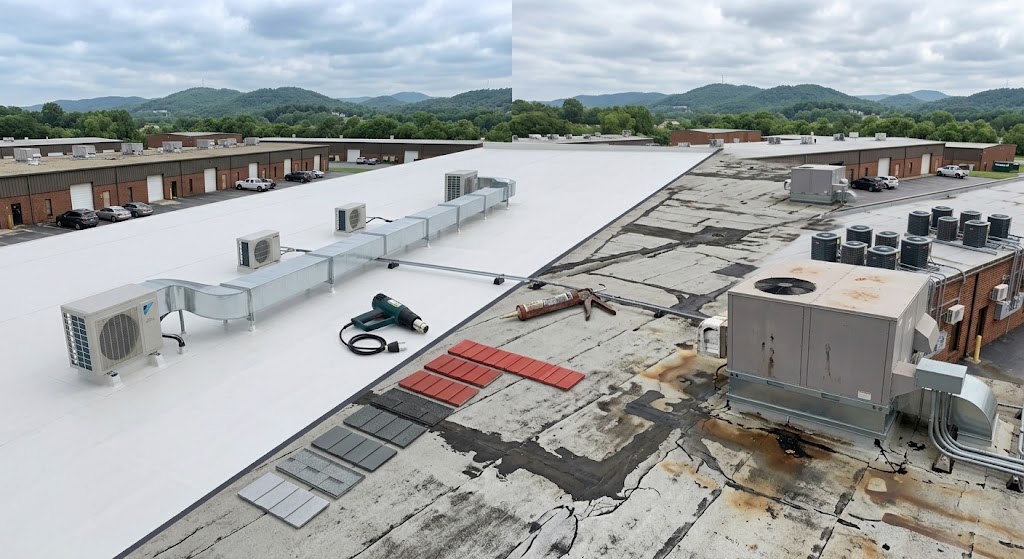
A leaking roof, missing shingles, or storm damage presents every homeowner with an immediate financial crossroads. Should you pay for a localized patch to solve the immediate leak, or should you invest thousands of dollars in a complete roof replacement?
While patching a roof is significantly cheaper upfront, repeatedly repairing an aging roofing system often leads to compounding expenses, hidden wood rot, and wasted money. Conversely, replacing a roof prematurely strips away useful service years from a functioning structural asset. Finding the exact financial tipping point, known as the break even point, allows you to make a data-driven choice that protects both your home interior and your long-term bank account.
This guide walks you through the mathematical formulas, structural indicators, and financial break-even metrics required to decide whether to repair or replace your roof today.
1. The Core Financial Metrics: Repair vs Replacement
To evaluate your options objectively, you must first understand current average price metrics across the residential roofing industry.
A typical localized roof repair costs between $300 and $1,500. This scope generally covers fixing isolated flashing around pipe boots, replacing a handful of blown-off architectural shingles, or sealing a chimney reglet joint. Major structural repairs, such as replacing a rotted valley or rebuilding water-damaged wood sheathing across a 200-square-foot section, can run between $1,500 and $3,500.
In contrast, a complete residential roof replacement for a typical single-family home generally ranges from $8,000 to $18,000, depending on overall roof square footage, pitch multipliers, material selection, and structural tear-off complexity.
To determine whether a repair quote makes financial sense, consumer advocates often reference the 50 Percent Rule. If the total cost of a proposed repair exceeds 50 percent of the cost of a complete new roof replacement, you should almost always choose replacement. However, even if a repair costs significantly less than 50 percent, the age and remaining lifespan of your current system can completely invert the financial equation.
For a deeper look into cost frameworks across various repair scenarios, review our cost-based guide to roof repair versus replacement.
2. The Math Behind the Break Even Point
The break-even point is the exact threshold where the annualized cost of maintaining an old roof exceeds the annualized cost of purchasing a new roofing system.
To calculate your break-even threshold, use the following annualized cost formula:
$$\text{Annualized Cost} = \frac{\text{Initial Investment Cost}}{\text{Expected Useful Lifespan in Years}}$$
Let us examine two real-world financial scenarios to illustrate how this formula works in practice.
Scenario A: The Young Roof with Isolated Storm Damage
Consider an architectural shingle roof that is 6 years old on a 25-year design lifespan. The roof has sustained localized wind damage along a single ridge, requiring an $800 repair quote. A full replacement would cost $12,000.
- Expected remaining lifespan: 19 years.
- Annualized value of a new $12,000 roof over 25 years: $480 per year.
- Cost of the repair distributed across remaining lifespan: $800 divided by 19 years equals $42 per year.
In Scenario A, paying $800 to preserve 19 years of remaining service life costs only $42 per year. The break-even calculation heavily favors executing a targeted repair because the overall system remains structurally sound, flexible, and young.
Scenario B: The Aging Roof Near the End of Its Useful Life
Now consider a standard 3-tab asphalt shingle roof that is 18 years old on a 20-year design lifespan. The roof has developed a valley leak, and a contractor quotes $2,500 to tear back surrounding shingles, replace rotted underlayment, and install new metal flashing. A full replacement costs $10,000.
- Expected remaining lifespan: 2 years.
- Cost of repair per remaining year: $2,500 divided by 2 years equals $1,250 per year.
- Annualized cost of a brand new $10,000 roof lasting 25 years: $10,000 divided by 25 years equals $400 per year.
In Scenario B, spending $2,500 to buy just 2 additional years of service life costs $1,250 annually. Buying a new roof costs only $400 per year over its lifecycle. Here, paying for a repair exceeds the break-even threshold by more than three times, making the repair a financially poor decision.
3. Physical Variables That Shift Your Break Even Threshold
Math provides a clear starting point, but physical structural variables on your roof can instantly alter the break-even calculation.
Age and Material Degradation
Asphalt shingles degrade under continuous exposure to ultraviolet radiation and thermal cycling. Over time, volatile oils evaporate from the asphalt compound, causing shingles to lose their flexibility, shed ceramic granules, and become brittle. Once an asphalt shingle roof reaches 80 percent of its intended lifespan, driving nails through old shingles during a repair often cracks surrounding brittle shingles, creating secondary leak points.
Extent of Systemic Moisture Penetration
A roof leak is rarely confined to the surface shingles. Water that penetrates outer shingles soaks into underlying synthetic underlayment, plywood decking sheathing, and attic insulation. If moisture has spread across multiple roof sections, localized patch repairs will fail to address hidden structural decay beneath the surface.
To verify whether hidden moisture or trapped attic condensation is degrading your wooden roof sheathing from below, scheduling a comprehensive attic inspection provides essential diagnostic data before you make a final repair decision.
Recurring Repair History
If you have paid for two or more localized repairs over the past three years, your roof has reached systemic failure. Continually patching different sections of an aging roof creates a cumulative expense cycle that rapidly surpasses the upfront cost of a complete replacement.
4. Hidden Financial Factors: Energy, Insurance, and Resale Value
When calculating the financial break-even point, many homeowners forget to include secondary financial benefits that lower the net cost of a full replacement.
Energy Efficiency Improvements
Modern replacement roof assemblies incorporate high-performance synthetic underlayments, reflective cool-roof shingle granules, and balanced ridge ventilation systems. Upgrading an outdated roof can lower attic temperatures during summer peak months by up to 30 degrees Fahrenheit, reducing home cooling costs by 10 to 15 percent annually.
Home Insurance Premium Discounts
Insurance carriers frequently offer premium discounts for homes with brand-new, code-compliant roofs, particularly those utilizing Class 3 or Class 4 impact-resistant architectural shingles. Conversely, insurance providers in many regions are increasingly refusing to renew policies on homes with asphalt shingle roofs over 15 to 20 years old.
Property Appraisal and Resale Value
Installing a new roof delivers one of the highest returns on investment of any exterior home improvement project. Prospective buyers and appraisal inspectors look favorably on new roofs, allowing sellers to recover a significant portion of project costs at closing. To explore how a new installation impacts property appraisals and home marketability, read our report on return on investment and home resale appraisal values.
5. Decision Matrix: When to Repair vs When to Replace
To simplify your decision, consider these explicit criteria for each path.
Choose Roof Repair If:
- Your roof is under 12 years old and in good overall physical condition.
- The damage is confined to a single isolated area caused by a specific storm event or falling tree branch.
- Surrounding shingles remain flexible, retaining their ceramic granules and color profile.
- Total repair costs remain below 15 to 20 percent of a complete replacement quote.
- The underlying plywood or OSB decking is completely dry and structurally sound.
If your roof meets these criteria, exploring specialized roof repair solutions with a certified local contractor will extend your system lifespan efficiently.
Choose Full Roof Replacement If:
- Your asphalt shingle roof is over 15 to 20 years old.
- Shingles show widespread granule loss, curling edges, cupping tabs, or widespread thermal splitting.
- The repair cost exceeds 30 to 50 percent of a full replacement quote.
- Plywood decking sheathing shows signs of soft spots, sagging, or widespread wood rot.
- You plan to sell your home within the next 3 to 5 years and want to avoid buyer concession demands during closing inspections.
When a full replacement is the smartest financial choice, reviewing modern residential roof replacement options ensures your new investment includes certified installation mechanics and long-term warranty protection.
6. How to Evaluate Contractor Quotes and Avoid Hidden Markups
Whether you decide to patch an isolated leak or replace your entire roof, securing a transparent, itemized proposal is essential for protecting your budget.
Unscrupulous contractors often deliver vague, single-lump-sum quotes that omit crucial details like tear-off fees, disposal costs, or specific material brands. During a repair or replacement, these contractors hit homeowners with expensive change orders for items that should have been included in the original estimate.
When reviewing estimates from competing contractors, demand an itemized quote that explicitly breaks down:
- Specific shingle manufacturer, product line, and color selection.
- Exact type of underlayment (high-performance synthetic versus basic organic felt paper).
- Code-compliant drip edge flashing specifications and material gauges.
- Complete flashing scope for walls, chimneys, valleys, and pipe boots.
- Explicit per-sheet replacement costs for damaged plywood decking.
- Dumpster, hauling, and magnetic yard cleanup fees.
- Written warranty details covering both material defects and contractor workmanship.
To ensure your contractor proposals adhere to industry transparency standards, consult our guide on transparent roofing estimates and fair pricing standards.
7. Partnering with Regional Specialists
Deciding between roof repair and full replacement does not have to rely on guesswork or high-pressure contractor sales pitches. By analyzing the age of your current system, calculating annualized cost formulas, and evaluating structural deck integrity, you can determine your exact break-even point with confidence.
Investing in localized repairs makes sense when your roof is young and structural components remain sound. However, when an aging roof reaches the end of its design life, continuing to pay for band-aid repairs wastes money that is better applied toward a modern, warrantied roofing system.
At The Roof Resource of East TN, we provide independent, consumer-focused advice, zero-pressure inspections, and fully itemized pricing across every project. Whether you need a simple leak repair or a complete high-performance roof installation, our expert team is ready to assist you.
Are you trying to calculate the break-even point for your roof? Contact our expert team today to schedule a thorough inspection and receive an itemized quote.
More Articles

Questions to Ask a Roofer: 20 Must Ask Items Before Signing Today
How to Compare Roofing Quotes: Apples to Apples Price Guide Today

Drip Edge Installation: Why Code Requires It in Many Areas Today in East TN

Best Roof Sealants for Leaks: Which Products Actually Last Today