Roof replacement permits can feel like paperwork you wish you could skip, until the day you need proof the work was legal and inspected. The truth is simple: some roof replacements require a permit, some do not, and many depend on where you live and what exactly you are doing to the roof system. A “simple re-roof” in one city might be exempt, while the same project across a boundary line may require an application, fees, and inspections.
This guide gives you a full fan-out of the permit topic so you can quickly answer four practical questions:
- Do I need a permit for my roof replacement?
- What type of permit is it, and who pulls it?
- What does it usually cost, and what affects that cost?
- How do I avoid delays, fines, and rework?
We will also explain how The Roof Resource makes this easier by helping clients coordinate and manage the permit process so you are not stuck trying to interpret municipal rules on your own.
What a roof permit actually is and why it exists
A roof replacement permit is typically a building permit issued by a city, county, or state permitting authority. It allows the jurisdiction to verify that the work meets basic safety standards and follows adopted codes.
Permits exist to reduce risks like:
- roof assemblies that are installed incorrectly and fail early
- insufficient underlayment or flashing details that cause leaks
- improper ventilation that causes moisture problems
- structural issues that go unaddressed, such as damaged decking or framing
- unpermitted changes that cause insurance and resale problems later
The permit is not just for the government. It is also a protection for homeowners because it creates an official record that the project was allowed, performed, and inspected when required.
The short answer: when you usually need a roof replacement permit
You are more likely to need a permit when your roof replacement includes anything beyond “same material, same structure, same roofline.”
In general, roof work is more likely to require a permit if it includes:
- structural changes (repairs to rafters, trusses, or framing)
- decking replacement beyond minor patching (large sheathing replacement)
- changing the roofing type (for example, switching from shingles to metal, tile, or another system that changes load or attachment)
- adding roof features like skylights, dormers, or new roof penetrations
- modifying ventilation in a way that changes roof assembly components
- work tied to other trades like electrical, solar, mechanical, or structural changes
Roof work is less likely to require a permit if it is truly a “like-for-like” replacement with no structural changes, but that exemption varies by jurisdiction and it is not safe to assume.
The only reliable rule is this: permit requirements are local. Always confirm with the city or county that has authority where the property sits.
Why permit rules vary so much
There are three reasons you will see different answers for the same question:
1) Authority depends on location boundaries
A home “in Knoxville” might be inside city limits, in county jurisdiction, or in a smaller municipality with its own codes office. Each can have different rules and portals.
2) The adopted code and enforcement approach can differ
Even when areas follow the same base code family, local amendments and enforcement policies vary. One jurisdiction may require a permit for roofing if the project reaches a certain valuation or includes certain scopes. Another may treat “re-roof” as exempt if there are no structural changes.
3) Storm events change enforcement intensity
After major storm events, some jurisdictions tighten enforcement because they see more unlicensed crews, more unpermitted work, and more complaints. That can affect inspection frequency and documentation requirements.
What counts as a “roof replacement” for permit purposes
Homeowners use “roof replacement” to mean everything from a small repair to a full tear-off. Permitting offices usually categorize roofing work into something like these buckets:
Roof repair
Small localized repairs, such as replacing a few shingles, resealing flashing, or fixing a small leak point.
Re-roof
Removing and replacing roofing materials without altering the roof structure. This often includes tear-off, underlayment, shingles, flashing work, and ventilation components.
Roof replacement with structural repair
Any re-roof that includes decking replacement beyond small patches, framing repairs, or changes that affect load paths.
Roof alteration
Work that changes roof design, slope, footprint, penetrations, or other structural features.
The category matters because it determines whether plan review is required, whether inspections are required, and how fees are calculated.
Common permit triggers homeowners miss
Many homeowners think permits only apply to “big renovations.” In roofing, these triggers are commonly overlooked:
Decking replacement
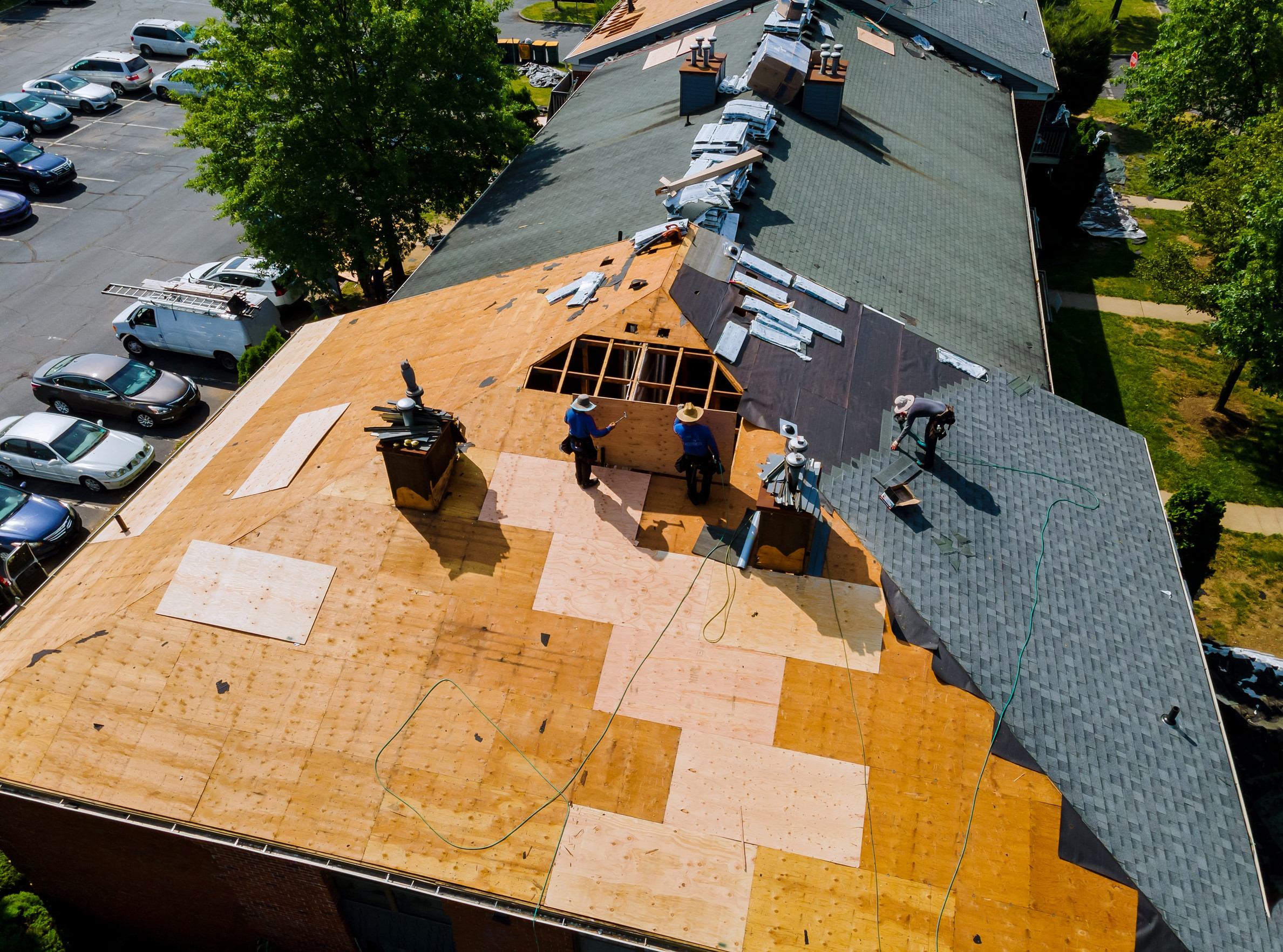
Even if the visible scope is “replace shingles,” large sheathing replacement may trigger permitting because it is structural work. If a contractor tells you “we will just replace bad wood as we go,” ask how that affects permitting in your area.
Two layers or more
Some jurisdictions limit overlays and require tear-off beyond a certain layer count. If your roof has multiple layers, the job becomes more than cosmetic replacement.
Switching materials
Changing from shingles to metal or another system can change fastening requirements, underlayment type, weight, and code compliance items. That often triggers a permit even when a shingle re-roof might not.
Adding skylights or new penetrations
Skylights and penetrations impact structural framing, flashing, and water control. That frequently requires permitting and inspection.
Work in historic districts or regulated zones
Some neighborhoods have design review requirements. That is not always a building permit, but it can still be a required approval step.
Solar installs paired with roofing
Solar is often permitted separately and can add electrical permitting. If roofing and solar happen together, the project becomes more complex from a permitting standpoint.
Who pulls the permit: homeowner vs contractor
In many places, either a contractor or a homeowner can apply for a permit, but the risk profile is different.
If the contractor pulls the permit
This is usually the preferred route because the contractor is responsible for scheduling inspections, meeting code requirements, and providing documentation.
You should still verify:
- the permit is issued to the correct address
- the contractor is properly registered if the jurisdiction requires registration to pull permits
- insurance documentation is current if required for permit issuance
If the homeowner pulls the permit
Homeowners can sometimes pull permits as an owner-builder, but that typically shifts liability and compliance responsibility to you. If anything goes wrong, the permitting authority will hold the permit holder accountable.
If a contractor pressures you to pull the permit “to save time” or “to avoid fees,” be cautious. That can be a sign they are not properly registered, not properly insured, or attempting to avoid oversight.
What the permit process usually looks like
Even though each jurisdiction is different, most roof replacement permitting follows a familiar sequence.
Step 1: Confirm whether a permit is required
This is usually a quick call or portal lookup. You need to describe the scope correctly, including tear-off, decking repairs, and any changes to roof structure or materials.
Step 2: Submit the application
Typical items requested include:
- property address and parcel information
- scope description (re-roof, repair, structural repair)
- valuation or estimated cost of work
- contractor information, license, or registration if applicable
- proof of insurance in some jurisdictions
- roof plan details if structural work is included
Step 3: Pay fees
Fees vary and can include a permit fee, plan review fee, and sometimes inspection or reinspection fees.
Step 4: Permits issued and work begins
Once issued, the permit is posted or recorded according to the jurisdiction’s rules.
Step 5: Inspections
For many roof replacements, inspections may include:
- decking inspection if significant sheathing replacement occurs
- flashing and underlayment verification in certain cases
- final inspection depending on local practice
Step 6: Closeout
After inspections pass, the permit is finalized and becomes a record that the work was compliant.
How much roof replacement permits cost
Permit costs are not one fixed number. Most jurisdictions base permit fees on project valuation, meaning the estimated cost of the work. Some also use fee schedules and calculators tied to valuation.
What typically affects permit cost:
- project valuation (higher valuation usually means higher fee)
- whether plan review is required
- whether inspections are required and how many
- whether reinspection fees apply if something fails inspection
- whether the project is bundled with other permits (solar, electrical, structural)
Typical cost components you might see
A roof replacement permit may include:
- application and processing fee
- building permit fee based on valuation
- plan review fee if required
- inspection fees or reinspection fees
- administrative fees for portal processing
A practical way to think about it
Instead of asking “what does a roof permit cost,” ask:
- “Is it valuation-based in my jurisdiction?”
- “Does my scope trigger plan review or inspections?”
- “Are there added fees for structural repair or additional trades?”
Many jurisdictions publish fee schedules or calculators, but the accurate number comes from your local authority because valuation and scope determine the fee.
How long permitting takes and what delays it
Permitting timelines vary widely. Some are issued quickly, some require review. A few predictable factors determine the pace.
Permit issuance can be fast for simple scopes
If the work is a straight re-roof with no structural changes and the jurisdiction has a streamlined process, permits may be issued quickly.
Permits take longer when plan review is required
Plan review often applies when:
- structural repairs are significant
- roof alterations are involved
- additional systems are added (skylights, solar, major ventilation modifications)
- zoning or historic district review is triggered
Common delay causes
- incomplete application details
- incorrect contractor registration information
- missing proof of insurance
- unclear scope description that triggers additional questions
- backlog after storms
- scheduling lag for inspections
The good news is most delays are avoidable if the application is submitted correctly the first time.
Inspections: what officials usually care about on roofing jobs
Not all jurisdictions do the same inspections for roofing, but when inspections happen, inspectors are typically focused on whether the roof assembly matches code intent and manufacturer instructions.
Common focus areas:
- decking condition and attachment when wood replacement is involved
- underlayment type and installation where required
- flashing and penetrations that prevent leaks
- ice and water protection in required zones
- ventilation components if part of the scope
- safe installation practices and compliance with adopted code requirements
The inspection is not just about “did you put shingles on.” It is about whether the roof system is built to prevent failure.
What happens if you skip a required permit
Skipping a required permit can create problems that cost far more than the permit itself.
Possible consequences include:
- stop work orders that pause the job mid-project
- difficulty selling the home if unpermitted work is discovered
- issues with insurance claims if documentation is required
- retroactive permitting costs, reinspection fees, or penalties
- forced removal or rework if the installation does not meet code
Even if you are not planning to sell soon, unpermitted work can come up during refinancing, insurance claims, or future repairs.
Special situations that change permit requirements
HOAs and neighborhood approvals
Even if a city permit is not required, HOA approvals may still be required. HOAs commonly regulate shingle color, metal roof appearance, and visible changes.
Multifamily and commercial properties
Roofing permits for multifamily and commercial buildings often have different requirements, including more formal plan review and stricter inspection processes.
Mobile homes and manufactured homes
Manufactured homes can have special requirements depending on how the roof system is altered or repaired.
Storm damage jobs and insurance
After hail or wind events, homeowners often rush to start work. That is when permit mistakes happen. If your insurance claim is involved, having a clean permit record can help support documentation later.
How The Roof Resource makes the permit process easier
Most homeowners do not want to become experts in local building department rules. They want a roof done right, with fewer surprises, and without paperwork turning into a week-long headache.
The Roof Resource helps by:
- confirming the correct permitting authority for your address
- helping you identify whether your scope triggers a permit
- coordinating with the roofing contractor to ensure the right permit is pulled
- helping gather and organize scope details and documentation the office will ask for
- supporting scheduling coordination so inspections do not delay the job
- helping you avoid common “scope wording” mistakes that trigger avoidable delays
If you want to start with a clear roof scope before permits enter the conversation, begin with our homeowner guide to Roof Replacement.
Homeowner checklist: how to avoid permit surprises
Use this checklist before you sign a contract.
1) Ask directly whether a permit is required for your scope
Do not accept “we never pull permits” as an answer. Ask how your jurisdiction treats re-roof work, decking replacement, and material changes.
2) Confirm who pulls the permit and whose name it is under
If the contractor pulls it, verify the permit is issued for your address and matches the contractor name.
3) Get decking repair pricing and approval rules in writing
Decking is the most common scope expansion and it can affect permitting. Make sure your contract has clear change order rules.
4) Check HOA approvals if you have one
Color and material restrictions can delay work even when permits are simple.
5) Confirm inspection scheduling timing
If an inspection is required, ask how soon the contractor can schedule it and whether it will pause the job.
6) Keep copies of the permit and final inspection record
This is useful for resale, insurance documentation, and future repairs.
What to ask a roofer about permits
If you want to keep it simple, ask these questions:
- Do you pull permits when required in my jurisdiction?
- Who is listed on the permit as the applicant?
- What parts of my scope might trigger permitting or inspections?
- How do you handle decking replacement if it is discovered during tear-off?
- What is your plan to keep the roof protected if inspections delay progress?
- Will I receive final permit closeout documentation when the job is finished?
A contractor who answers these clearly is usually easier to work with.
Conclusion: permits are about reducing risk, not adding hassle
Roof replacement permits are not always required, but when they are required they protect you. They create a record of compliant work, reduce the risk of unsafe installations, and prevent expensive problems during resale or insurance documentation.
The best approach is not guessing. The best approach is confirming requirements for your address and scope, then keeping the process organized so permits and inspections do not slow the project.
If you want the easier path, The Roof Resource helps you manage the process by clarifying whether permits apply, coordinating with the right contractor, and keeping the project moving without permit confusion.
More Articles

Questions to Ask a Roofer: 20 Must Ask Items Before Signing Today

How to Compare Roofing Quotes: Apples to Apples Price Guide Today

Drip Edge Installation: Why Code Requires It in Many Areas Today in East TN

Best Roof Sealants for Leaks: Which Products Actually Last Today